Pursuit and Time Trial: Racing the Clock
In the timed events there is nowhere to hide. No slipstream, no tactics to wait behind, just a rider or a team against the clock. They are the events where equipment, aerodynamics and pacing are fine-tuned to the hundredth of a second.
Individual pursuit
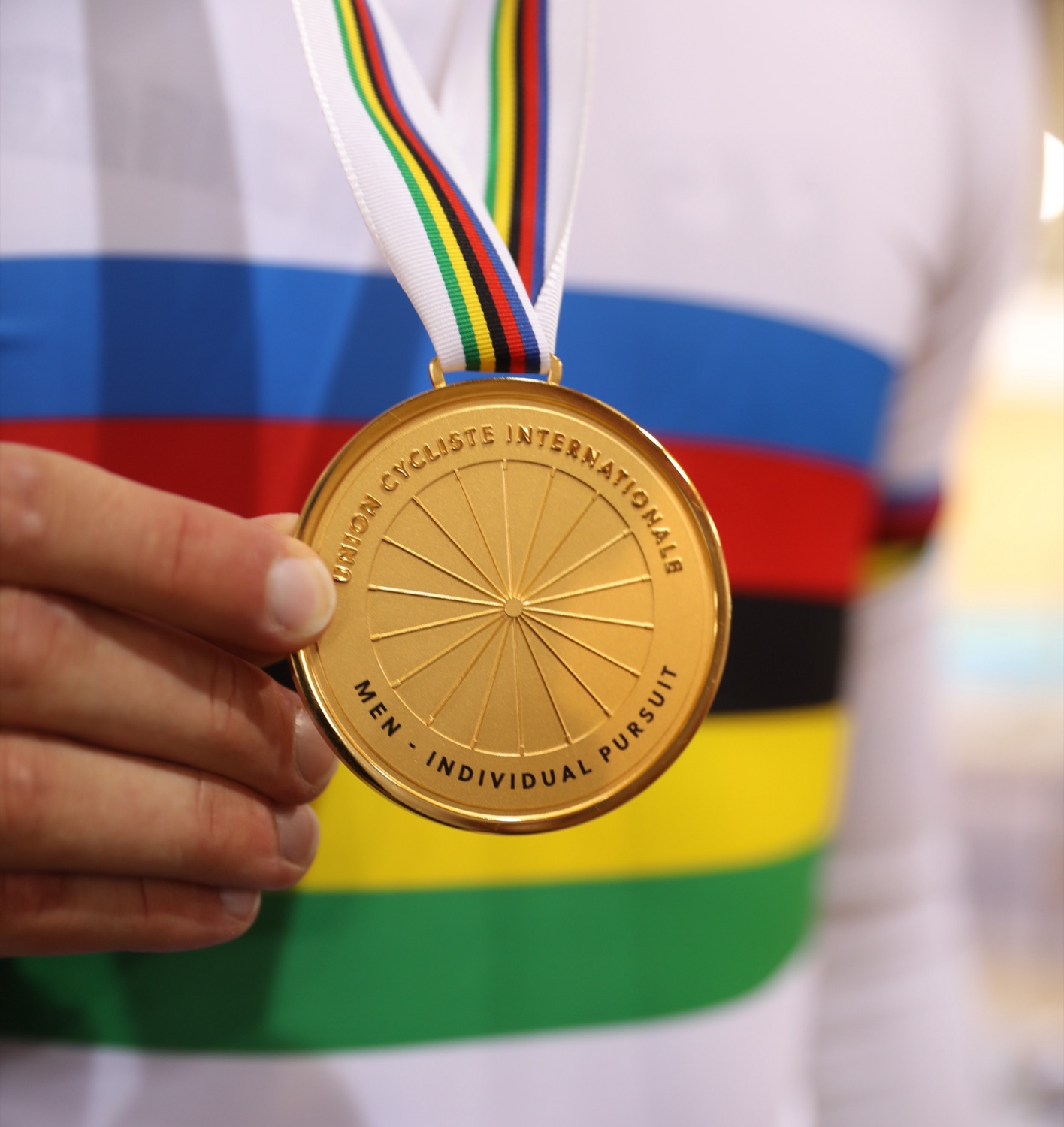
Two riders start at the same moment on opposite sides of the track, in the middle of each straight. Each tries to cover the distance faster than the other, and if one catches the other the race is over. Qualifying times decide who rides for gold and bronze. Elite distances have changed over the years and differ between men and women; junior distances are shorter than the elite ones. Italy's Samuele Bonetto and Russia's Alina Moiseeva won the junior titles in Cairo.
The secret of the pursuit is pacing. Start too fast and the final kilometre becomes agony; start too slow and the time is gone. Coaches stand at the edge of the track and signal whether the rider is up or down on schedule.
Team pursuit
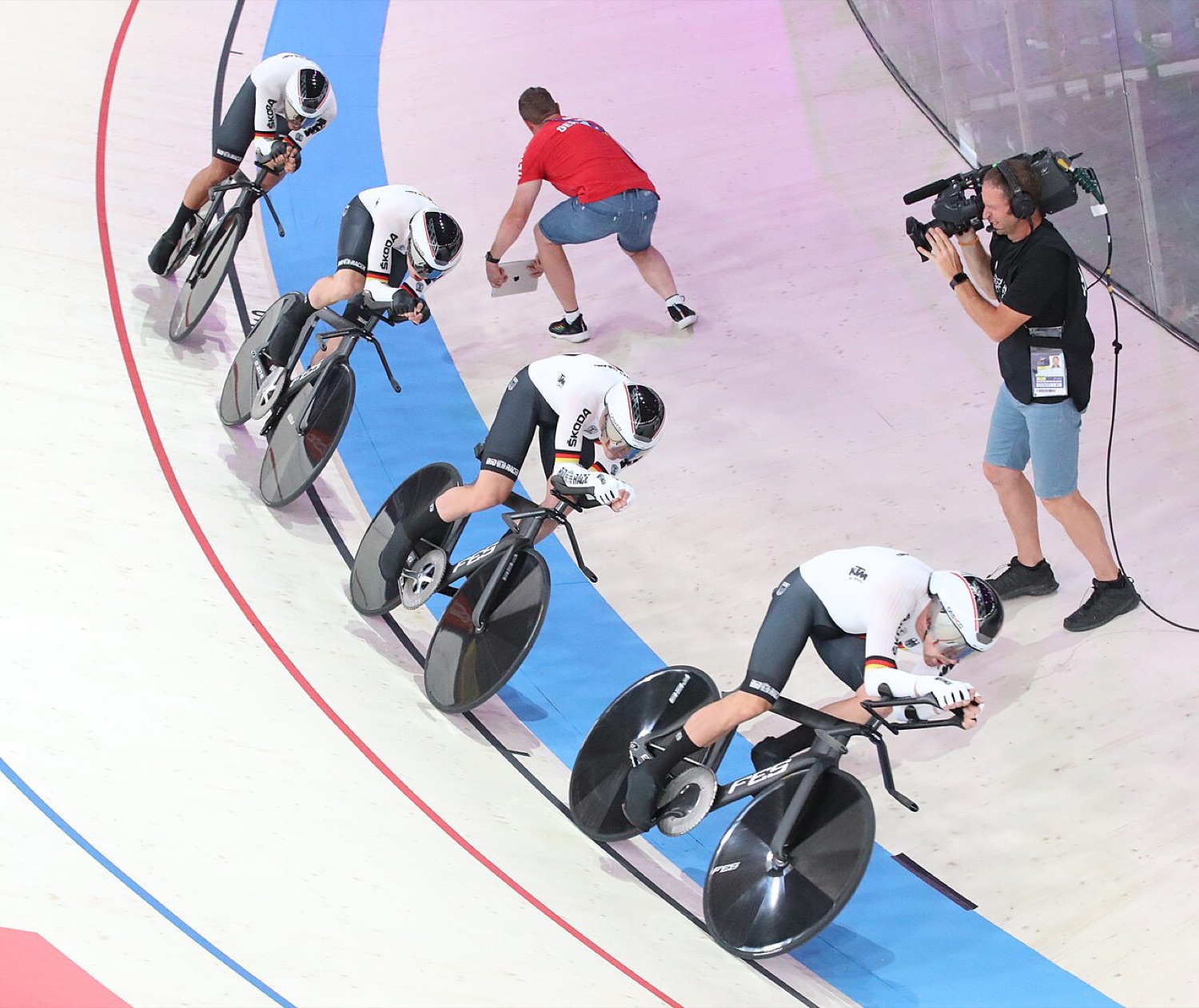
Four riders, 4 km at elite level, in a tight line. The leader takes the wind for a lap or half a lap, then swings up the banking and drops to the back. The time is taken when the front wheel of the third rider crosses the line, so teams often sacrifice one rider with a huge final effort before they peel off. Changes must be perfect: a gap of a few centimetres costs energy that cannot be recovered. Germany won the men's junior team pursuit in Cairo, beating Italy, while the Russian quartet beat France in the women's final.
Team pursuit essentials
- Riders
- Four start; the time stops on the third
- Distance
- 4 km at elite level
- Start
- Teams on opposite sides of the track
- Format
- Qualifying, first round, then finals for gold and bronze
- Olympic
- Yes, men and women
Time trial
The kilo, the 1 km time trial for men, and the 500 m time trial traditionally raced by women, are flat-out efforts from a standing start. The first half-lap is about raw power to get a big gear turning; the last lap is about holding on as the legs fill with lactic acid. It is no longer on the Olympic programme, which makes the world championships the main stage for it.
Equipment and aerodynamics
Most of the effort in a pursuit goes into pushing air aside. Teams invest heavily in skinsuits, helmets, disc wheels and frames, and in body position: low, narrow and still. In junior racing the equipment gap between rich and poor nations is narrower than in elite racing, which is one reason junior results say a lot about raw talent.
Why juniors love these events
The timed events are honest measures of ability, so national coaches use them for selection. A strong junior pursuit time is often the first sign of a future elite team pursuiter, or of a professional road time triallist. Read more about that transition in from junior worlds to elite careers.
Betting angle: pursuits are among the most predictable events in track cycling, because qualifying times are public before the finals. That makes them interesting for head-to-head and "time under/over" markets, and less so for long-odds punts. See betting on track cycling.