Sprint, Keirin and Team Sprint Explained
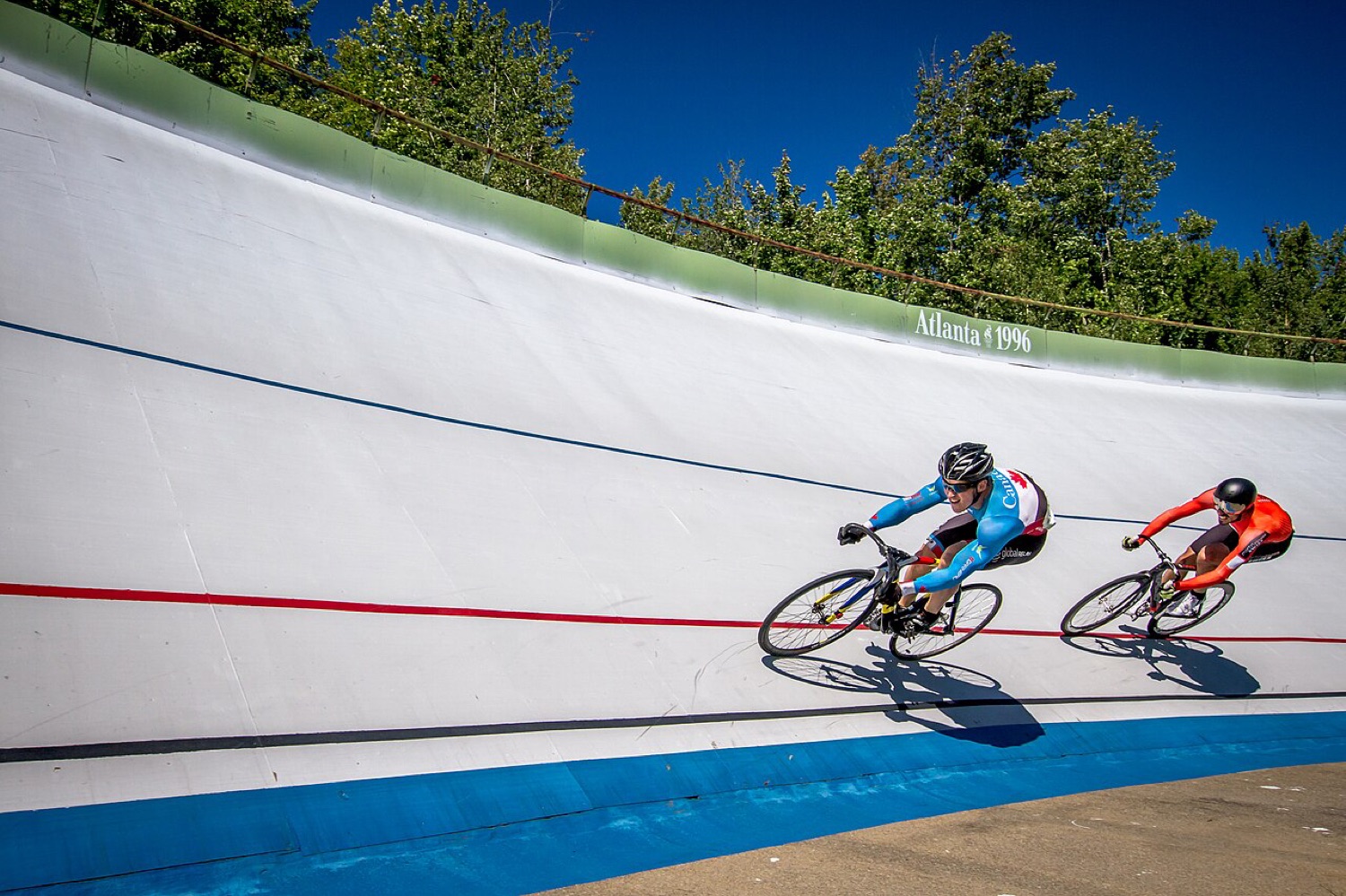
The sprint events are the fastest races in cycling. Top elite men touch speeds above 70 km/h, and even juniors are well past 60. But speed is only half the story: the sprint and keirin are tactical games where reading an opponent matters as much as raw power.
The sprint
Every sprint tournament starts with a flying 200 m time trial. Riders wind up their speed over a couple of laps and are timed over the final 200 m. The times seed a knockout tournament of head-to-head matches over three laps. From the quarter-finals onwards, matches are usually best of three.
The early laps can be slow, even stationary: riders balance on the banking, each trying to force the other to lead. The rider behind has the advantage of the slipstream and the element of surprise. The leader has the advantage of position, and can control the pace from the front or launch a long sprint. Track stands, sudden dives off the banking and a final jump with 200 m to go are all part of the craft.
Sprint in numbers
- Qualifying
- Flying 200 m, often under 10 seconds at elite level
- Match distance
- Three laps of a 250 m track
- Format
- Knockout, best of three in later rounds
- Typical winner
- Explosive, tactically clever, very strong in the gym
The keirin
The keirin was invented in Japan in 1948 as a betting sport, and it is still one of Japan's major forms of legal gambling. It became an Olympic event in 2000. In UCI races, around six riders line up behind a motorised pacer, which gradually lifts the speed and then leaves the track with about three laps to go. From there it is a free-for-all sprint. Riders fight for position behind the pacer from the start, because the rider who is boxed in on the inside when the pacer pulls off often has nowhere to go.
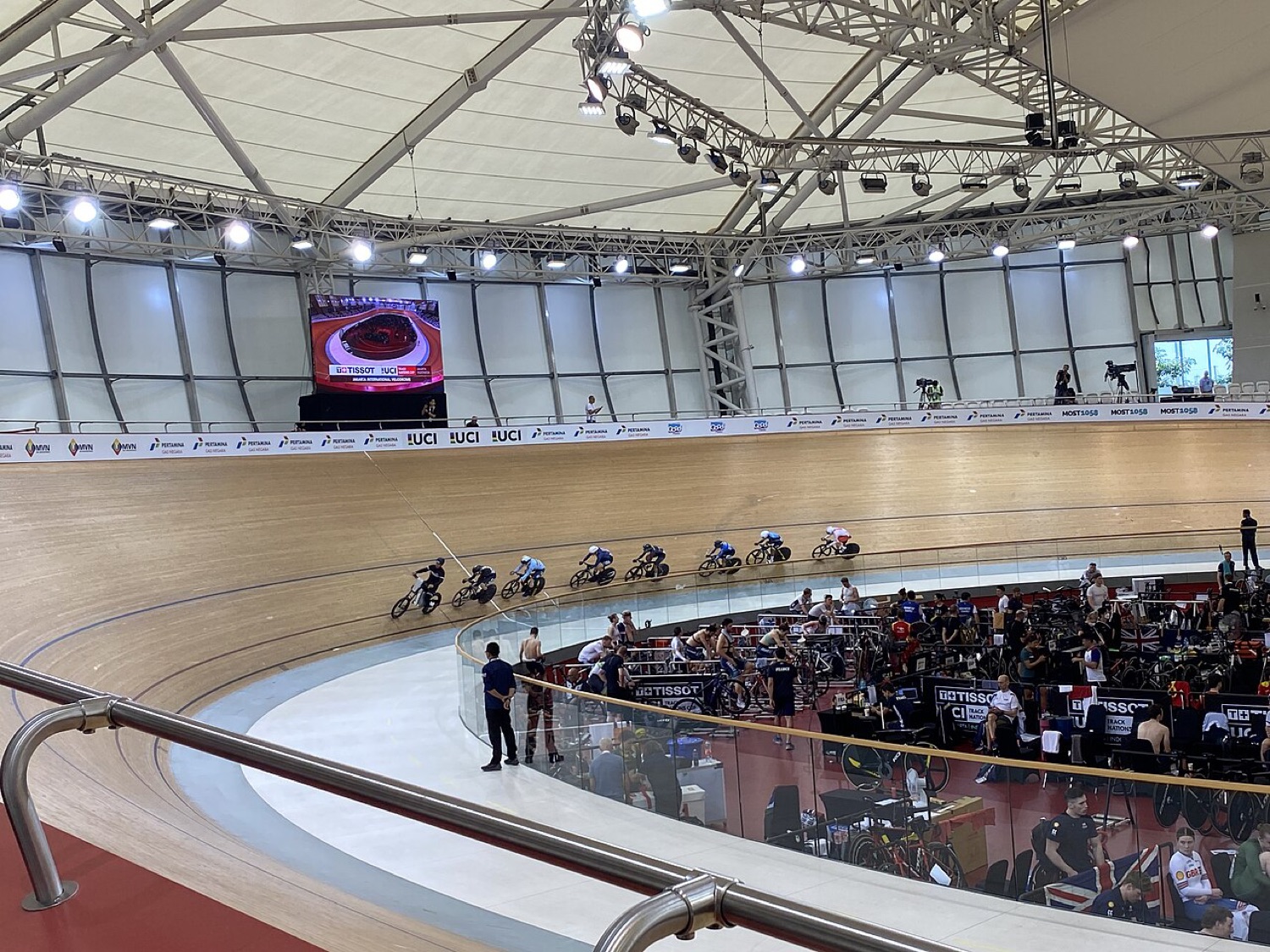
The Japanese version is different again, with larger fields, longer races, riders forming regional "lines" and a pari-mutuel betting system that turns over enormous sums each year. We explain it in keirin and pari-mutuel betting in Japan.
The team sprint
The team sprint is a three-lap relay. Three riders start together from a standstill. The first rider, the "man one" or starter, leads for one lap and swings up the banking. The second leads the second lap and swings off. The third, usually the team's strongest finisher, carries the speed home alone. Two teams start on opposite sides of the track, and times decide who progresses. Perfect changes, with each rider tucked inches behind the wheel in front, are worth tenths of a second.
The time trial
Often grouped with the sprints, the time trial is a solo effort from a standing start: 1 km for men and, traditionally, 500 m for women. At the Cairo junior worlds the men's title went to Russian rider Grigorii Skorniakov, a rare rider who also won the madison, showing how versatile juniors can be. More on solo events in racing the clock.
What we saw in Cairo
The sprint programme at the 2021 junior worlds was dominated by two riders. Alina Lysenko won all four women's sprint events, and Nikita Kalachnik won the men's sprint and keirin as well as team sprint gold. Germany's Willy Weinrich and Clara Schneider collected silver after silver, and Italy's Mattia Predomo took sprint bronze. Full results are in Cairo 2021 results.
Betting angle: the match sprint is one of the few cycling events offered as a straight head-to-head. Qualifying times are public an hour or two before the matches, which gives sharp bettors data that some bookmakers price slowly. Keirin, with six riders and frequent chaos, is a different proposition. Both are covered in betting on track cycling.